Thursday, March 26, 2015

Healthy Smile Series: Don’t cry foul!

Bad breath is treatable

A lot of people are embarrassed by bad breath, but it is a problem that can usually be solved. Certain foods and beverages can cause bad breath. When strong foods like onions and garlic are the cause, bad breath is only temporary. However, some people suffer from more permanent and lasting breath problems.

The causes of bad breath


Most bad breath, also known as halitosis, is caused by incomplete or insufficient oral hygiene, along with eating foods that contribute to bad breath. What you eat affects the air you exhale. Certain foods contribute to bad breath. Once the food is absorbed into the bloodstream, it is transferred to the lungs, where it is expelled.

Brushing, flossing and mouthwash will mask the odor only temporarily. Odors continue until the body eliminates the food. Dieters may develop unpleasant breath from infrequent eating.

Dry mouth


Another common cause of bad breath is dry mouth, which happens when the flow of saliva decreases. Saliva is necessary to cleanse the mouth and remove particles that may cause odor. Dry mouth happens naturally when you sleep. You may refer to it when you wake as “morning breath.” It is generally worse in those people who are “mouth breathers” or sleep with their mouths open and those who tend to snore more often.

Dry mouth also may be caused by certain medications, salivary gland problems, cancer chemotherapy, or head and neck radiation treatments. It also is simply more common to have dry mouth as you age. If you suffer from dry mouth, your dentist may prescribe artificial saliva or suggest using sugarless candy and increasing your fluid intake.

And smokers? Almost all people who use tobacco have bad breath. Talk to your dentist about ways to kick the habit.

Gum disease


Bad breath also may be a sign that you have other mouth issues, such as tooth decay or gum disease. One of the warning signs of gum disease is bad breath or a bad taste in the mouth. Gum disease is caused by plaque, the sticky, colorless film of bacteria that constantly forms on teeth.

The bacteria create toxins that irritate the gums. In the advanced stage of the disease, the gums, bone and other structures that support the teeth become damaged. With regular dental checkups, your dentist can detect and treat gum disease early. Sometimes, bad breath can be a sign of a more serious health issue. If your bad breath has a particular reoccurring odor; perhaps fishy, fruity or like ammonia, you might need to see your physician.

Diagnosis and treatment


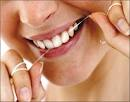
When you eat, minute particles of food get trapped between your teeth and in tiny grooves and bumps on your tongue. That’s why proper brushing and flossing are the first line of defense against bad breath.

Many people use mouthwash to combat bad breath, but most over-the counter rinses are just a temporary mask and do not solve the underlying problem. Your local West Michigan Dental Society member dentist may recommend a medicated mouthwash instead. With good care on your part and professional care from your dentist, you can combat bad breath and enjoy life with confidence.

Brought to you by the 600 members of the West Michigan District Dental Society in Kent, Ottawa, Ionia, Montcalm and Mecosta counties. West Michigan District Dental Society dentists are also members of the Michigan Dental Association.

For more information visit our website; Office of Brian Nylaan facebook page; or Brian S. Nylaan, D.D.S. facebook page.

Schedule an appointment.


Thursday, March 19, 2015

Healthy Smile Series: VELscope® Oral Cancer Screening

Oral cancer is often deemed the “forgotten disease,” because it kills more people than testicular cancer, cervical cancer and cancer of the brain each year and receives little publicity in return. Each year, over 30,000 Americans contract oral cancer, and only 57% of these people will live for more than five years without treatment.
Many people believe that if they abstain from tobacco and alcohol use, oral cancer will not affect them. Tobacco and alcohol use does contribute to oral cancer; however, 25% of those diagnosed abstain from both substances.
The best way to stay protected from oral cancer is to get annual oral cancer screenings. Most dentists perform an oral cancer exam during a regular dental checkup. The FDA-approved VELscope® offers dentists another examination tool to help detect oral cancer in its earliest stages. The VELscope® is a blue excitation lamp, which highlights precancerous and cancerous cell changes.
How does the VELscope® work?
The VELscope® uses Fluorescence Visualization (FV) in an exciting new way. Essentially, bright blue light is shone into the mouth to expose changes and lesions that would otherwise be invisible to the naked eye. One of the biggest difficulties in diagnosing oral cancer is that its symptoms look similar to symptoms of less serious problems. The VELscope® System affords the dentist important insight as to what is happening beneath the surface.
The healthy soft tissue of the mouth naturally absorbs the VELscope® frequency of blue light. Healthy areas beneath the surface of the soft tissue show up green, and the problem areas become much darker.
Here are some of the advantages of using the VELscope® System:
  • Can be combined with digital photography.
  • Detects lesions, white and red patches.
  • Detects problem areas that cannot be seen under white light.
  • Exposes precancerous and cancerous tissue.
  • FDA-approved.
  • Helps dentists check that diseased soft tissue is completely removed.
  • Helps diagnose oral cancer in its earliest stages, exponentially increasing the chance of survival.
  • Quick, painless examinations.
How is the VELscope® examination performed?
The VELscope® examination literally takes only two or three minutes. It is a painless and noninvasive procedure that saves many lives every single year.
Here is a brief overview of what a VELscope® examination is like:
Initially, the dentist will perform a regular visual examination of the whole lower face. This includes the glands, tongue, cheeks and palate as well as the teeth. Next a pre-rinse solution is swilled around the mouth for slightly less than a minute. The dentist provides special eyewear to protect the integrity of the retinas. The lights in the room are dimmed to allow a clear view of the oral cavity.
The small VELscope® is bent to project blue light inside the mouth. Lesions and other indicators of oral cancer are easily noticeable because they appear much darker under the specialized light.
If symptoms are noted, the dentist may take a biopsy there and then to determine whether or not this is oral cancer. The results of the biopsy dictate the best course of action from there. Otherwise, another oral cancer screening is performed in one year’s time.
If you have any questions or concerns about oral cancer screening or the VELscope® system, please contact our office.

Thursday, March 12, 2015

Healthy Smile Series: Why Are Dental Fillings So Important?


We try to brush and floss regularly, and to avoid sugary between-meal snacks... but sometimes we just can't seem to avoid tooth decay.

According to a branch of the National Institutes of Health, tooth decay is the #1 chronic disease of children and adults in America. If you haven't had one cavity by the age of 17, be proud: your select group comprises just 22% of the U.S. population! For most other people, cavities are a fact of life.

Another fact of life is the dental filling, a time-tested and effective way to keep tooth decay from doing further damage. True to its name, the filling seals up the small hole in your tooth that decay-causing bacteria have created.

It's one of the most common dental treatments dentists perform: Every time you go to the dentist office, you are checked to see if you have a cavity that needs filling, even if you don't notice anything wrong. Why does your dentist care so much?


It's simple: If your tooth is left untreated, the decay wouldn't go away — it would spread deeper inside the tooth. When it reached the pulp (nerve) tissue of the root canal, it would begin to cause real discomfort, or even intense tooth pain. The infection could spread further, and might result in the loss of a tooth — a complicated (and costly) problem to remedy. Isn't it better to stop decay now with a simple procedure

Thursday, February 19, 2015

Healthy Smile Series: The Sip for a Healthy Smile....


Starting your morning with a daily cup of java could keep your teeth and gums healthy.
 Boston University scientists reporting in the Journal of Periodontology looked at 30 years of dental history from 1,152 adults. What they found: people who sipped one or more cups of coffee a day had the fewest teeth with bone loss, which is a sign of periodontal disease. Study author Elizabeth Kaye, Ph.D. explains that periodontal tissue becomes inflamed when exposed to bacteria,which can damage gums and teeth. But coffee contains chemicals that counteract the inflammation, as well as antioxidants that 'mop-up' harmful free radicals. 

A word of caution: if you sip coffee be sure to brush, or at the very least rinse your mouth with a glass of water to avoid tooth decay. Coffee, especially if sweetened with sugar can lead to tooth decay. 

Here are some tips for keeping your teeth healthy: 

Tips for Brushing and Flossing

Good Home Care

How to prevent Cavities

Schedule a dental evaluation  

Reference: 
First Magazine for Women
Boston University
Brian S. Nylaan, D.D.S. 

Thursday, February 12, 2015

Dental Whitening Series: Instant Smile brighteners

If you need, or want, to flash a gleaming smile try these quick tricks.... 

Try a blue-based lipstick:

Sweeping on a lipstick with blue undertones (pinky-red or fushia hues) will counteract any yellowing of the teeth so your smile appears whiter in seconds.

Try a lip stain on your gums: 

Rubbing a dark pink lip stain on the gums creates a contrast between the gums and the teeth helping teeth to look two shades whiter. To do: remove excess moisture from the gums by blotting with a tissue, then apply the stain with your finger.

Try a shimmery gloss: 

When enamel wears thin, teeth can take on a very lackluster appearance. Help add shine by applying a clear gloss which reflects light off the teeth for a healthy, beautiful sheen.


For a more permanent smile brightener we recommend Custom tray home whitening or in-office Laser whitening.

references:

First Magazine
Nylaan Dental Team

Nylaan Dental
5011 Plainfield Ave NE
Grand Rapids MI 49525


Thursday, February 5, 2015

Dental Whitening Series: Why should you whiten your teeth ?

When the American Academy of Cosmetic Dentistry asked women what they would like to change most about their smiles an overwhelming majority chose brighter, whiter teeth - it is no surprise: A glowing grin boosts confidence, imparts good health and can help us look up to 10 years younger.

A recent Crest survey revealed that whiter teeth have a direct correlation with social and professional success. The researchers found that women who whiten their teeth were 50% more likely to have a higher salary and more job offers, and were considered more professional, friendly and attractive than those who did not whiten.

Once you whiten your teeth your smile will be so luminous you will not be able to stop smiling and who does not like to see or share a beautiful smile?

For more information visit our website.


References:

First Magazine
American Academy of Cosmetic Dentistry
Crest - Proctor and Gamble
Nylaan Dental 

Nylaan Dental
5011 Plainfield Ave NE
Grand Rapids MI 49525

Thursday, January 29, 2015

Dental Whitening Series: How to stop sensitivity before it starts.

Sensitivity (that sharp twinge we get when the teeth are exposed to hot or cold) can occur with any type of whitening. If you are not yet sensitive prevent it with this trick: two weeks before your whitening appointment, start brushing with toothpaste infused with potassium nitrate.  This agent blocks pain signals from the nerve.


MI Paste and MI Paste Plus are available through our dental office and can be helpful in reducing sensitivity.  MI Paste and MI Paste Plus can help soothe sensitivity while providing nourishing minerals to tooth surfaces.

MI Paste and MI Paste Plus are the only products for professional use containing RECALDENT™ (CPP-ACP), a special milk-derived protein that releases vital minerals into your mouth (calcium and phosphate; also fluoride in MI Paste Plus).

MI Paste and MI Paste Plus relieve sensitivity by protecting dental nerve endings by forming a buffer against plaque. MI Paste and MI Paste Plus can also help redeposit those lost minerals back into the oral environment. MI Paste and MI Paste Plus are excellent for tooth sensitivity due to cold air, hot and cold drinks, sweet and sour food or drinks.

Both sensitivity toothpaste and MI Paste or MI Paste Plus are terrific for stopping sensitivity prior to whitening your teeth. Our office also places a desensitizing agent, which reduces any post whitening sensitivity, as the final step to our Laser Whitening.


reference:

First Magazine
MI Paste.com
Nylaan Dental Team

Nylaan Dental
5011 Plainfield Ave NE
Grand Rapids MI 49525